Your 2026 Guide to Online Riches: Dropshipping vs. Ecommerce
Welcome to 2026, a world where online income generation has become more accessible than ever before. The digital landscape is ripe with opportunity, and you're here to seize it. But with so many avenues to explore, choosing the right path can feel overwhelming. Today, we're diving deep into two popular models: dropshipping and traditional ecommerce. By the end of this guide, you'll have a clear understanding of which strategy aligns best with your goals, resources, and vision for building a thriving passive income stream.
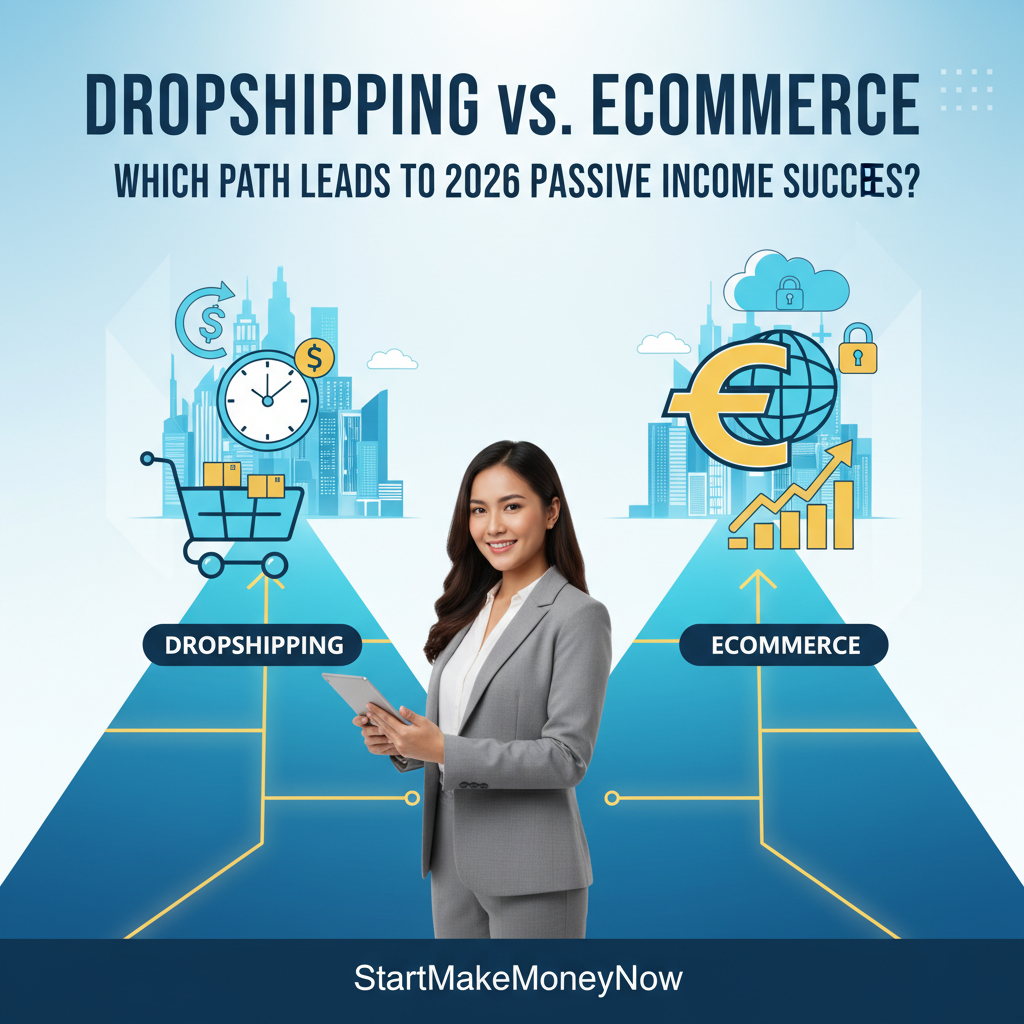
Understanding Dropshipping: The Lean Startup Approach
Imagine running an online store without ever holding any inventory. That's the beauty of dropshipping. In this model, you partner with a supplier who handles all the warehousing, packaging, and shipping. When a customer places an order on your website, you simply forward it to your supplier, and they take care of the rest. You pocket the difference between the retail price you charge and the wholesale price you pay the supplier.
The Perks of Dropshipping:
- Low Startup Costs: This is perhaps the biggest advantage. You don't need to invest in inventory upfront, significantly reducing your financial risk.
- Wide Product Selection: You can offer a vast array of products without worrying about storage space or inventory management.
- Location Independence: As long as you have a laptop and an internet connection, you can run your dropshipping business from anywhere in the world.
- Scalability: Scaling is relatively easy since you don't have to worry about handling increased order volume yourself. Your supplier handles the logistics.
The Challenges of Dropshipping:
- Lower Profit Margins: Due to the lower upfront investment, profit margins tend to be smaller compared to traditional ecommerce.
- Inventory Management Issues: You rely on your supplier to keep their inventory updated, which can sometimes lead to stockouts and customer dissatisfaction.
- Shipping Complexities: Coordinating shipping from multiple suppliers can be challenging and may result in longer delivery times and higher shipping costs for your customers.
- Supplier Dependency: Your business's success hinges on the reliability and quality of your suppliers.
Exploring Traditional Ecommerce: Building Your Brand Empire
Traditional ecommerce involves purchasing and storing your own inventory. You manage the entire process, from sourcing products to fulfilling orders. This model offers greater control and potentially higher profit margins, but it also requires a more significant upfront investment and ongoing management.
The Advantages of Traditional Ecommerce:
- Higher Profit Margins: By purchasing products in bulk, you can often negotiate better prices and achieve higher profit margins.
- Greater Control: You have complete control over your inventory, product quality, and branding.
- Brand Building Opportunities: You can create a unique brand experience and build strong customer relationships.
- Direct Customer Interaction: You have direct contact with your customers, allowing you to gather valuable feedback and improve your products and services.
The Disadvantages of Traditional Ecommerce:
- Higher Startup Costs: You need to invest in inventory, storage space, and potentially staff to manage your operations.
- Inventory Management: Managing inventory can be complex and time-consuming. You need to track stock levels, prevent spoilage, and handle returns.
- Shipping and Fulfillment: You're responsible for packaging and shipping orders, which can be logistically challenging, especially as your business grows.
- Risk of Obsolescence: If your products don't sell, you're stuck with the inventory, which can lead to financial losses.
Dropshipping vs. Ecommerce: A Head-to-Head Comparison
Let's break down the key differences between dropshipping and traditional ecommerce to help you make an informed decision:
| Feature |
Dropshipping |
Traditional Ecommerce |
| Startup Costs |
Low |
High |
| Inventory Management |
None |
Required |
| Profit Margins |
Lower |
Higher |
| Control |
Limited |
High |
| Scalability |
High |
Moderate (requires more investment) |
| Risk |
Lower |
Higher |
Choosing the Right Path for Your 2026 Success
So, which model is right for you? It depends on your individual circumstances and goals. Consider these factors:
- Budget: If you're on a tight budget, dropshipping is a more accessible option.
- Risk Tolerance: If you're risk-averse, dropshipping offers a lower-risk entry point into ecommerce.
- Time Commitment: Both models require time and effort, but traditional ecommerce often demands more hands-on management.
- Brand Vision: If you have a strong brand vision and want to create a unique customer experience, traditional ecommerce may be a better fit.
- Product Niche: Some product niches are better suited for dropshipping than others. Research your niche carefully to determine the best approach.
Remember, in 2026, automation is key. Consider leveraging tools to streamline your processes, regardless of which model you choose. For instance, if you opt for dropshipping and want to expand your reach across multiple marketplaces like eBay and Amazon, a tool like ZeeDrop Crosslister could be invaluable. It drastically reduces the time and effort required to list and manage your products, freeing you up to focus on marketing and customer service. This allows you to focus on scaling your business, instead of tedious listing tasks.
Actionable Steps to Start Your Online Business Today
- Identify Your Niche: Research profitable niches with high demand and low competition.
- Choose Your Business Model: Based on your budget, risk tolerance, and goals, decide whether dropshipping or traditional ecommerce is the right fit for you.
- Find Reliable Suppliers: If you choose dropshipping, thoroughly vet your suppliers to ensure they offer quality products and reliable shipping.
- Create an Online Store: Set up your online store using a platform like Shopify, WooCommerce, or BigCommerce.
- Market Your Products: Use a combination of search engine optimization (SEO), social media marketing, and paid advertising to drive traffic to your store.
- Provide Excellent Customer Service: Respond promptly to customer inquiries and resolve any issues quickly and efficiently.
- Analyze and Optimize: Track your sales, website traffic, and customer feedback to identify areas for improvement and optimize your business for success.
The Future is Yours: Embrace the Power of Online Commerce
In 2026, the opportunities in the online marketplace are limitless. Whether you choose dropshipping or traditional ecommerce, with hard work, dedication, and a strategic approach, you can build a thriving passive income stream and achieve your financial goals. The key is to take action, learn from your mistakes, and never stop innovating. The future of online commerce is yours to create. Now go out there and make it happen!
